

Emery A. Rovenstine

Emery Andrew Rovenstine (1895-1960) was an American anesthesiologist
Rovenstine is associated with the directional spinal anaesthesia needle, developed and evaluated with Seymour J. Sarnoff in 1944. The needle had a closed terminal tip and a single side aperture near the point, with a hub marking to indicate the direction of flow. Sarnoff and Rovenstine used the device to test whether directing local anaesthetic cephalad or caudad in the subarachnoid space could improve control of spinal block height.
Rovenstine helped establish academic anaesthesiology in the United States and advanced therapeutic nerve block and pain treatment. He also developed residency training, departmental organisation, board certification, and the expansion of anaesthesia beyond the operating room.
Biographical Timeline
- 1895 – Born July 20, 1895 in Atwood, Kosciusko County, Indiana, USA
- 1912 – Began teaching in a one-room grammar school at about 17 years of age; attended Winona State Teachers College during high-school summer vacations.
- 1914 – Entered Wabash College, Indiana, on an athletic scholarship; played baseball, basketball and football.
- 1917–1919 – Graduated from Wabash College and enlisted in the US Army during World War I. Served in France with the Army Corps of Engineers. Exposure to battlefield shock and pain was later linked to his interest in medicine and anaesthesia.
- 1919–1923 – Taught mathematics, physics and chemistry; coached athletics at Menominee, Michigan, and La Porte, Indiana, while saving for medical school.
- 1923 – Entered Indiana University School of Medicine; developed an interest in anaesthesia, influenced by Arthur Ernest Guedel (1883–1956).
- 1928 – Graduated MD from Indiana University; completed internship.
- 1929 – Entered general medical practice in La Porte, Indiana; administered anaesthetics as part of local surgical practice.
- 1930 – Commenced entered anaesthesia training at the University of Wisconsin with Ralph Milton Waters (1883–1979)
- 1930–1935 – Resident and then assistant professor of anaesthesia at Wisconsin; worked with Waters on cyclopropane and helped establish it as a clinical anaesthetic agent.
- 1935 – Appointed chair of anaesthesia at Bellevue Hospital, New York, succeeding the regional anaesthesia tradition associated with Gaston Labat (1876–1934). Tasked with establishing an academic anaesthesiology department, residency training programme, and research programme.
- 1935–1960 – Professor and chairman, Department of Anesthesiology, New York University Medical Center; Director of Anesthesia, Bellevue Hospital.
- 1937 – Became president of the American Society of Regional Anesthesia
- 1938 – Became director of anaesthesia at Goldwater Memorial Hospital; visiting professor at Oxford University / Radcliffe Infirmary.
- 1939 – Visiting professor at the University of Rosario, Argentina.
- 1940 – Co-founder of the American Board of Anesthesiology; served as its president.
- 1941–1946 – Member of the National Research Council; during World War II served on the Army Advisory Board and helped secure the principle that Army general hospital operating rooms should be placed under anaesthesiologist supervision.
- 1943–1944 – President of the American Society of Anesthesiologists.
- 1948–1950 – Published with Emanuel M. Papper (1915–2002) and others on pain syndromes, nerve block therapy, procaine derivatives, and newer analgesic methods.
- 1957 – Received the Distinguished Service Award of the American Society of Anesthesiologists
- Died November 9, 1960 in New York City, aged 65
- 1962 – The Emery A. Rovenstine Memorial Lecture was established by the American Society of Anesthesiologists.
Medical Eponyms
Directional spinal anaesthesia needle
The directional spinal needle was not introduced de novo by Sarnoff and Rovenstine.
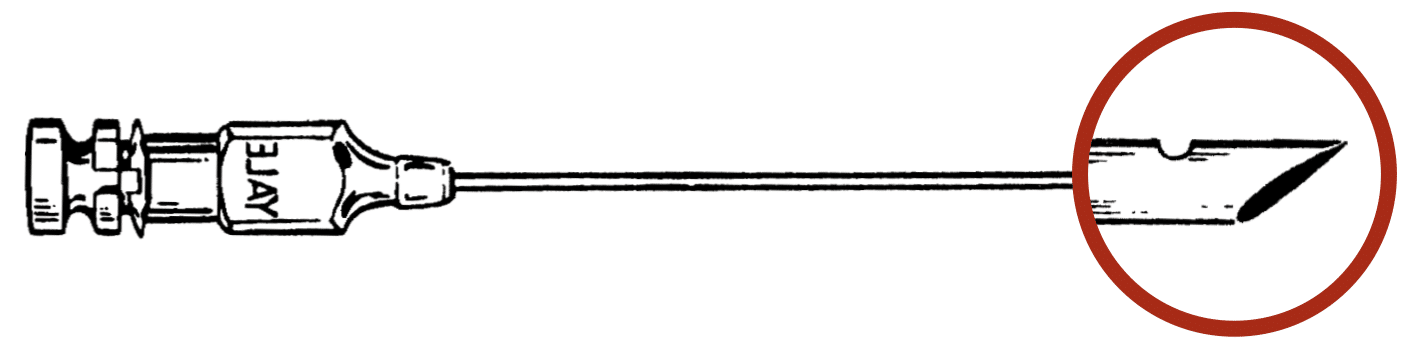
In 1931 the German surgeon Martin Kirschner (1879–1942) described a spinal needle intended to produce a gürtelförmige Spinalanästhesie a “belt-shaped” spinal anaesthetic. Wallace W. Dill (1877–1953) published his report on A directional needle in spinal anesthesia in 1932.
In 1940, William T. Lemmon (1896–1974) used a similar principle in the context of continuous spinal anaesthesia, a technique he developed with a retained malleable spinal needle and special operating mattress.
Then in 1945, Seymour J. Sarnoff and Rovenstine evaluated the directional spinal anesthesia needle experimentally and clinically, demonstrating improved control of spinal block height.
They used a needle with a bevelled point but no terminal opening. Instead, local anaesthetic was delivered through a single side aperture near the closed tip, with a mark on the hub indicating the direction of flow. Their aim was to improve control over the spread of spinal anaesthesia by directing the injected solution cephalad or caudad within the subarachnoid space.
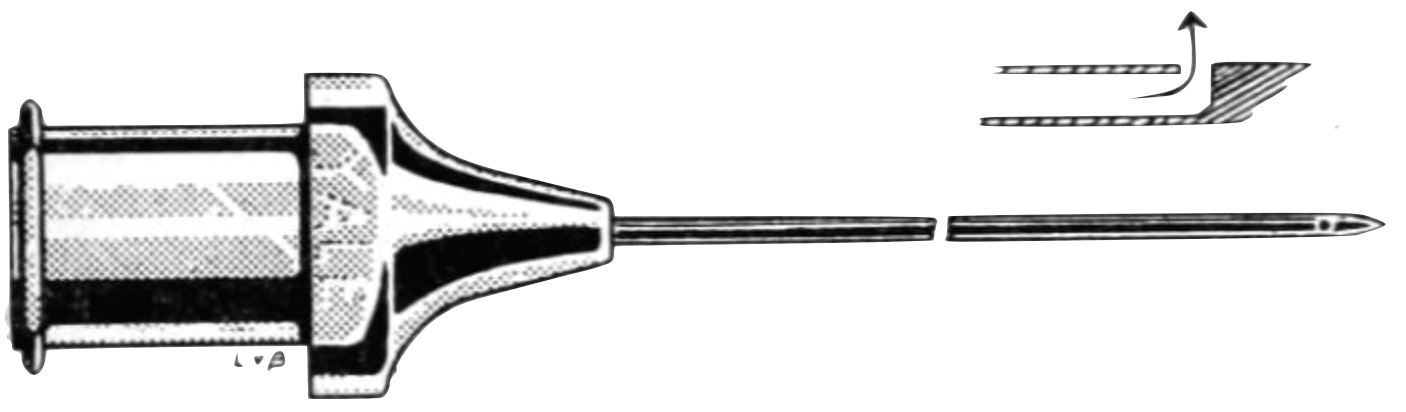
Laboratory experiments suggested that the bevel direction of a standard spinal needle did not influence spread, whereas needle angle did. With the directional needle, injected solution travelled predominantly in the direction of the aperture. In clinical use, cephalad versus caudad orientation produced an average difference of seven to eight dermatomes in sensory block height. Sarnoff and Rovenstine concluded: “The directional needle is useful for the more accurate control of the extent of spinal anesthesia.”
Key Medical Contributions
Academic anaesthesiology
Rovenstine was a central figure in the emergence of anaesthesiology as an academic medical specialty in the United States. After training with Ralph M. Waters at Wisconsin, he was appointed to Bellevue Hospital and New York University, where he developed a physician-led anaesthesia service, residency training programme, and research department. His career coincided with the transition of anaesthesia from a technical service to an organised specialty with its own clinical, educational, and scientific identity.
Regional anaesthesia
Rovenstine inherited the strong Bellevue regional anaesthesia tradition associated with Gaston Labat and extended it through teaching, publication, and clinical practice. His early paper on anaesthesia for transurethral prostatic resection compared transsacral and spinal block techniques, showing his interest in matching regional techniques to specific operations. Throughout his career, regional anaesthesia remained one of his major areas of publication and postgraduate instruction.
Therapeutic nerve block and pain medicine
Rovenstine helped move anaesthesiology beyond the operating room by promoting therapeutic nerve block and pain treatment as essential components of anaesthetic practice. His work with Hippolyte M. Wertheim and later Emanuel M. Papper (1915–2002) defined pain management as a clinical problem requiring anatomical knowledge, technical skill, and careful judgement.
Geriatric anaesthesia
Rovenstine’s 1946 article on geriatric anesthesia is an important early contribution to anaesthesia for older patients. Published in the first volume of Geriatrics, it placed anaesthetic management within the context of ageing physiology, operative risk, drug sensitivity, and perioperative judgement. This paper should probably be highlighted as one of the earliest explicit anaesthetic discussions of the geriatric patient.
Meet Emery A. Rovenstine
Major Publications
- Rovenstine EA. Anesthesia for transurethral prostatic resection: A comparative study of transsacral and spinal blocks. J Urol 1934; 31: 633-648.
- Rovenstine EA, Adriani J, Studdiford WE. Gas Changes in Maternal and Fetal Blood During Cyclopropane Obstetric Anesthesia. Cal West Med. 1940 Aug;53(2):59-64.
- Rovenstine EA, Wertheim HM. Therapeutic nerve block. JAMA 1941;117;(19):1599-1603.
- Rovenstine EA. The development of anesthesiology. N Y State J Med 1942; 42: 1838-1841.
- Sarnoff SJ, Rovenstine E. A directional spinal anesthesia needle. Anesthesiology 1944; 5(4): 413.
- Sarnoff S J, Rovenstine EA. The utility of a directional needle in spinal anesthesia. N Y State J Med 1945: 45: 286-290.
- Rovenstine EA. Geriatric anesthesia. Geriatrics. 1946 Jan-Feb;1:46-53.
- Rovenstine EA, Papper EM. Therapy of pain. Surg Clin North Am. 1948; 28(2): 484-92.
- Rovenstine EA, Papper EM. The therapeutic role of procaine and its derivatives. Bull N Y Acad Med. 1949 May;25(5):298-306.
- Papper EM, Rovenstine EA. The control of pain: Newer analgesic methods and agents of value in the control of pain. N Y State J Med 1950; 50: 281-285.
- Rovenstine EA, Bartels J. A half century of progress in anesthesia in New York State. N Y State J Med 1951; 51: 121-123.
References
Biography
- Murphy M. Profiles: Anesthesiologist. The New Yorker, October 25, 1947: 36
- E.A. Rovenstine, M.D. ASA Newsletter. 1960; 24(12)
- E.A. Rovenstine, Physician, Dead. New York Times, November 10, 1960
- We Salute – Emery A. Rovenstine, B.A., M.D., D.Sc. Anesthesia and Analgesia 1960; 39(4): 24
- Bacon DR, Darwish H. Emery A. Rovenstine and regional anesthesia. Reg Anesth. 1997 May-Jun;22(3):273-9.
- Moon JS, Bacon DR. Ambition for Self and for Specialty: Emery A. Rovenstine and the Politics of Organized Anesthesia, 1937-1947. Anesth Analg. 2020 Dec;131(6):1934-1942.
Eponymous terms
- Kirschner M. Eine gürtelförmige, einstellbare und individuell dosierbare Spinalbetäubung. Der Chirurg. 1931; 3: 633–644.
- Dill WW. A directional needle in spinal anesthesia. Pennsylvania medical journal. 1932; 35: 244
- The Rovenstine Lectures. Part One. The History of Anesthesiology. 1994
- The Rovenstine Lectures. Part Two. The History of Anesthesiology. 1994
- Bacon DR. Gaston Labat, John Lundy, Emery Rovenstine, and the Mayo Clinic: the spread of regional anesthesia in America between the World Wars. J Clin Anesth. 2002 Jun;14(4):315-20.
Eponym
the person behind the name

BA MA (Oxon) MBChB (Edin) FACEM FFSEM. Emergency physician, Sir Charles Gairdner Hospital. Passion for rugby; medical history; medical education; and asynchronous learning #FOAMed evangelist. Co-founder and CTO of Life in the Fast lane | On Call: Principles and Protocol 4e| Eponyms | Books |